What to Wear and Bring to Lake Mývatn
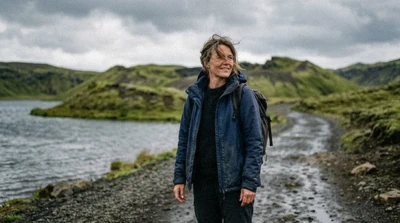
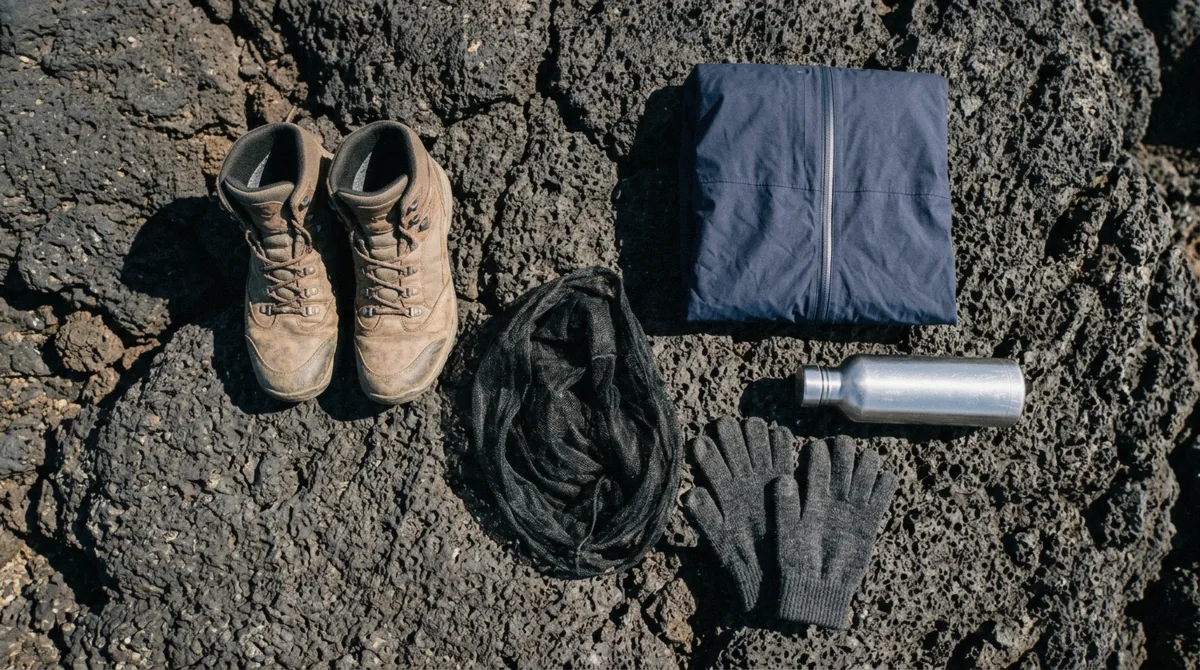
What to bring to Lake Mývatn comes down to three items: a windproof shell, shoes with grip and, between June and August, a head net. Everything else is comfort. The lake sits at 288 metres in open country where the wind arrives with nothing in its way, the ground at every stop is loose gravel or crusted clay, and the insects that gave the place its name hatch in clouds through the summer. Below is what goes in the bag, by season, and the handful of things people bring that stay in the car all day. The Lake Mývatn day trips on this site show which ones carry spare nets.
Quick answer
Bring a windproof shell, a warm mid layer, waterproof shoes with grip and a head net if you are visiting between June and August. Add swimwear and a towel if the geothermal lagoon is on your day, and traction spikes from November to March. Nothing at the sights charges an entry fee, so you need a card rather than cash, and tap water is drinkable everywhere.
Key takeaways
- A head net costs a few hundred krónur in Akureyri or at the shop in Reykjahlíð and is the single best purchase of your day between June and August
- Wind, not temperature, is what makes this landscape cold. A shell over a warm layer beats a thick coat
- Ground is loose gravel at Hverfjall, crusted clay at Hverir and packed roots at Dimmuborgir, so grip matters more than waterproofing
- Swimwear and a towel if you plan on the lagoon, where hire runs 1,100 and 1,200 ISK
- Traction spikes from November to March turn the Dimmuborgir trails from a hazard into a walk
- Leave silver and copper jewellery at the hotel; sulphur tarnishes both at Hverir and in the lagoon
The Core List
What goes in the bag in any month
This list works in July and in January. The seasonal additions come after it.
- Windproof, water-resistant shell jacket
- Warm mid layer, fleece or light down
- Waterproof shoes or boots with real tread
- Hat and gloves you can operate a phone in
- Refillable water bottle, since Icelandic tap water is excellent
- Payment card, because nowhere here needs cash
- Power bank, as cold drains phone batteries fast at Hverir
- Sunglasses, useful on snow and on a bright lake alike
- Small day bag that closes, for the wind
Why the shell matters more than the coat
Reykjahlíð averages 14.2°C on a July day and minus 1.8°C in January, which sounds manageable in both cases and is, until the wind gets involved. The basin is open on every side and there is nothing between you and the weather at Hverir or on the Hverfjall rim.
A thin windproof layer over a fleece handles a wider range than a heavy coat and packs into the bag when the sun comes out. If you own one waterproof item, make it the jacket rather than the trousers.
The Head Net, Explained
June to August, and worth every króna
The lake is named after the insects: mý is midge, vatn is lake. Two species hatch from the shallow water, one that bites and one that does not, and they swarm the face on warm still days. They peak through July and August and are gone by the first days of September.
Numbers swing hard between summers. One traveller in July 2026 was told by her driver that the swarm that year ran at a third of the previous summer's, and she still wrote that people should buy a net. Two other reviewers on the same route mentioned the word net in the same sentence as the word bugs.
Buy one in Akureyri before you leave, or at the shop in Reykjahlíð if you forget. Guides on the guided Lake Mývatn departures carry spares, but they run out on a bad week.
- Worst spot: the shore at Skútustaðagígar on a warm still afternoon
- Best relief: any wind at all, higher ground, and the geothermal field at Hverir
- Eating outside near the water in July does not work. Eat on the bus or in the car
- Repellent helps less than mesh, because these swarm rather than bite
What the Tours Provide
Taken from what the operators actually list
Nine departures run this route and they include different things. Nobody hands out head nets as standard, though guides carry a few spares. The table is built from the operators' own inclusion lists rather than from what a bus usually does.
| Item | Usually provided | Bring your own | Notes |
|---|---|---|---|
| Transport and guide | Every departure | No | 6 to 7 hours, all nine |
| WiFi on board | Four departures | No | Minibuses and two coaches |
| Packed lunch | One departure | Most days yes | Sandwich, chocolate and juice on the coach |
| Sit-down lunch | One departure | Most days yes | Included on the hotel pick-up minibus |
| Coffee and a kleina | One departure | Usually yes | Served at Hotel Goðafoss on the port run |
| Bottled water | One departure | Yes | Tap water is excellent, carry a refillable bottle |
| Head net | Never | Yes, June to August | A few hundred krónur in Akureyri; guides carry spares |
| Traction spikes | Never | Yes, November to March | Any supermarket sells them |
| Swimwear and towel | Never | Yes | Hire at the lagoon runs 1,100 and 1,200 ISK |
| Lagoon entry | Never included | Pay on the day | From 7,900 ISK for an adult |
What that means for your bag
Two things follow. If you are on the coach with the packed lunch, you need water and nothing else edible. If you are on anything else, carry food from Akureyri, because the only stops are the café at Dimmuborgir and the shop at Goðafoss and both have queues when four buses arrive together.
The day trip that includes lunch and lagoon entry is the one that empties your day bag the most.
By Season
What to add, month by month
The core list stays the same. These are the additions that change with the calendar.
| Season | Add | Skip | Why |
|---|---|---|---|
| June to August | Head net, sunglasses, light layers | Heavy coat | Midges peak, highs near 14°C, 20 hours of light |
| September and October | Warm hat, gloves, headtorch | Head net | Insects gone, dark returns, colour on the heath |
| November to March | Traction spikes, thermal base layer, headtorch | Sun hat | Ice on every trail, 3 to 5 hours of daylight |
| April and May | Waterproof trousers, spare socks | Spikes, usually | Thaw turns the tracks to mud |
| Any month with the lagoon | Swimwear, towel, bag for wet things | Silver jewellery | Water 36 to 40°C, sulphur tarnishes metal |
Footwear, specifically
Hverfjall is 20 minutes up loose black gravel that moves under you on the way down. Hverir is crusted clay that gets slick after rain. Dimmuborgir runs on packed gravel with roots and built steps. None of it is technical, all of it punishes smooth soles.
Hiking shoes are ideal. Trainers with tread work in summer. Anything smooth is a bad afternoon, and from November a pair of slip-on traction spikes, which cost little in any Icelandic supermarket, does more for your day than better boots would.
What each stop demands
The kit list makes more sense once you know what the ground is doing at each stop.
| Stop | Ground | Wind exposure | What you need |
|---|---|---|---|
| Goðafoss | Steps and wet rock on the bank | Moderate | Grip, and a hood by the spray |
| Skútustaðagígar | Flat grass path | Low | Head net in summer, binoculars |
| Dimmuborgir | Packed gravel, roots, steps | Low, sheltered by lava | Grip, spikes in winter |
| Hverfjall | Loose black gravel climb | High on the rim | Grip, windproof shell, hat |
| Grjótagjá | Short rock scramble into a fissure | Low | Hands free, so a bag that closes |
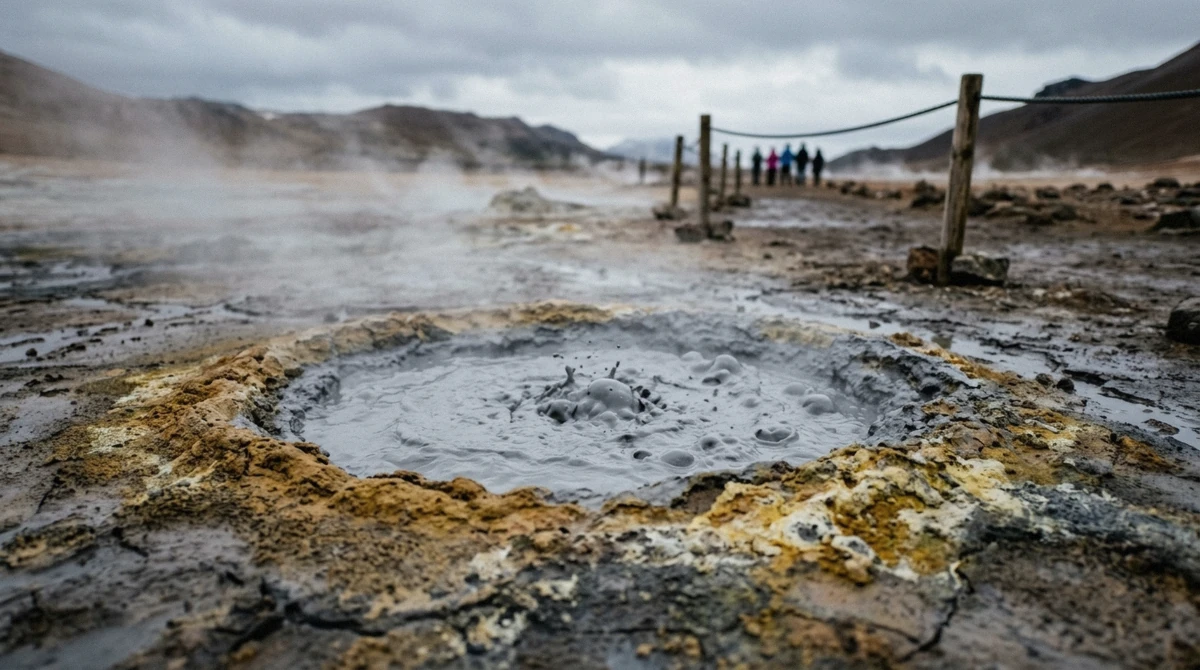
| Hverir | Crusted clay, slick after rain | High | Old jacket, marked paths, shoes you can rinse |
| Earth Lagoon | Level, indoors and out | None | Swimwear, towel, bag for wet things |
For the Lagoon
A separate small bag
The geothermal baths on the ridge east of Reykjahlíð reopened on 9 July 2026 as Earth Lagoon after a full rebuild. Water runs 36 to 40°C and the doors stay open to 23:00. Hire covers you if you arrive empty handed, at 1,100 ISK for a swimsuit and 1,200 ISK for a towel, which is worth knowing but not worth planning around.
- Swimwear you do not mind smelling faintly of sulphur
- Towel, or 1,200 ISK for hire
- Plastic bag for the wet things afterwards
- Hair tie, and no conditioner expectations
- Card for the swim-up bar
- Jewellery left in the locker, silver and copper especially
The shower rule
Icelandic pools require a full shower without swimwear before you get in, and attendants check. It is why these lagoons run with almost no chlorine. The new building has private showers, which makes the ritual easier than it used to be.
Full prices, tiers and hours are covered separately.
What Not to Bother With
Four things that stay in the car
People arrive with these every week and use none of them.
- An umbrella. Wind here turns one inside out inside a minute and the rain rarely falls straight down
- Cash. Iceland runs on cards to the last coffee, and no sight here charges anything anyway
- Insect repellent as your only defence. Mesh works, spray mostly does not against swarming midges
- Heavy hiking boots for the core ring. Nothing on the standard route needs an ankle-height sole
One thing worth the space
Binoculars. Fifteen duck species breed on this lake, the densest concentration in Europe, and from the path at Skútustaðagígar you can pick out Barrow's goldeneye, which lives here year round and nowhere else on the continent. Most people walk past that without knowing.
If you are bringing a camera
The light does most of the work here. In June the sun circles low for 22 hours, so the golden window that lasts 40 minutes elsewhere runs for half the night. In December the whole three-hour day arrives at that angle.
What the landscape asks for is a wide lens for Dimmuborgir and the Hverfjall rim, and something longer for the ducks at Skútustaðagígar. Steam at Hverir eats lens coatings for breakfast: keep a cloth in the pocket and expect to wipe every few frames. Cold drains batteries at a rate that surprises people, so carry a spare against the chest rather than in the bag, and let the camera warm up slowly indoors afterwards rather than pulling it straight out of a cold car.
Our recommendation
🎯 Buy the net in Akureyri, not at the lake
The shop in Reykjahlíð sells head nets and knows exactly how much you want one by the time you reach it. Buy yours in Akureyri before you leave, for a few hundred krónur, and put it in the bag even if the forecast says wind.
After that, one windproof shell and one pair of shoes with grip cover everything on the nine stops around the lake. If you are on a guided day, the bus is warm and the stops are short, so pack lighter than instinct suggests.
Packing Questions
Do you really need a head net at Lake Mývatn?
Between June and August, yes on a still warm day and no on a windy one. Since you cannot know which you will get, carry one. They cost a few hundred krónur in Akureyri, weigh nothing and turn the worst part of a summer visit into a footnote. Outside those months you will not need it at all.
What should I wear at Lake Mývatn in summer?
A windproof shell over a light warm layer, walking shoes with grip, and sunglasses. July averages 14.2°C by day, which feels colder on the exposed ground at Hverir and on the Hverfjall rim. Add a head net for the shore.
What do I need in winter?
Everything above plus a thermal base layer, a warm hat, gloves, a headtorch and slip-on traction spikes. January averages minus 1.8°C by day and minus 8.4°C at night, and every trail carries packed ice. The winter tour guide covers what stays open.
Can you drink the tap water?
Yes, everywhere in Iceland, and it is better than anything sold in a bottle. Fill up at your accommodation or at the café in Reykjahlíð. The hot tap in this region smells of sulphur, which is normal and harmless; run the cold one.
Should I bring cash?
No. Cards work at every café, shop and fuel pump, and none of the sights charges an entry fee. A card with no foreign transaction fee is the only useful preparation.
What should I not wear?
Smooth-soled shoes, a good jacket you care about, and silver or copper jewellery. The sulphur at Hverir and in the lagoon tarnishes metal and settles into fabric. Leave the nice things at the hotel and the umbrella at home.
Is there anywhere to buy what I forget?
Reykjahlíð has a supermarket, a fuel station and a shop that sells head nets, gloves and basics. Akureyri has everything, at better prices, 100 km west. If you are on one of the day trips from Akureyri, the driver will stop long enough to grab what you need.